MPLS L2VPN
Point-to-point (VPWS) and multipoint (VPLS, EVPN) layer 2 services.
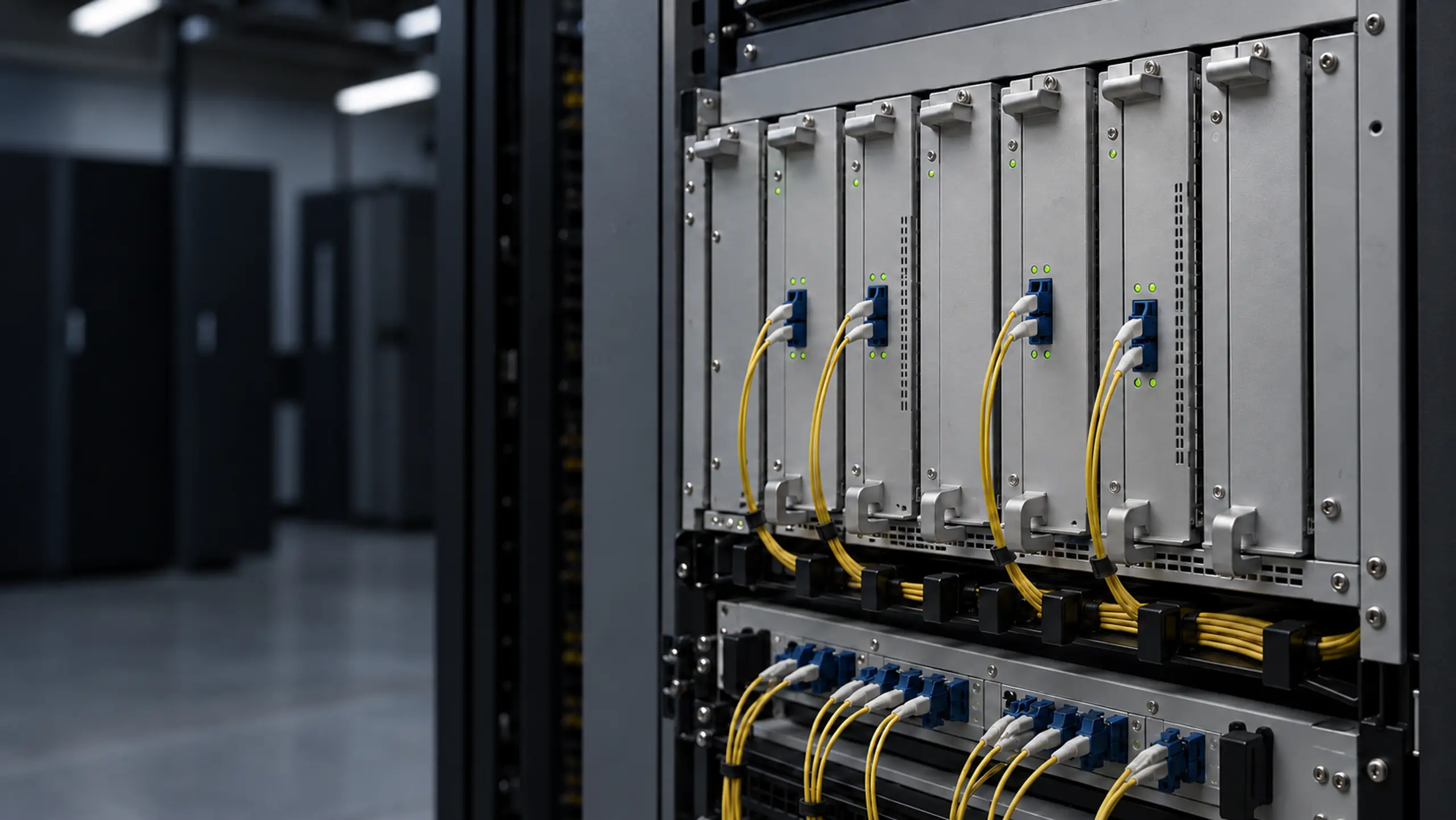
We interconnect your sites and data centres with an MPLS service layer and a DWDM optical transport layer, built for high capacity, resilience and manageability.
As enterprise networks grow, links between sites need more than capacity: they need separation, quality of service and protection. MPLS provides that service layer, while DWDM carries many high-capacity optical channels over the same fibre.
Mixnet treats transport networks as a whole, from design and commissioning to operation, and plans the topology together with its protection scenarios.
Point-to-point (VPWS) and multipoint (VPLS, EVPN) layer 2 services.
Isolated routing domains between sites with BGP/MPLS IP VPN.
Path control with RSVP-TE or Segment Routing; fast reroute (FRR).
Class-based QoS policies for voice, video and critical applications.
Many wavelengths over a single fibre pair; 100G and 400G coherent transport.
Flexible wavelength routing, remote reconfiguration and optical-layer protection.
DWDM uses every wavelength on the ITU grid within the C-band as a separate high-capacity channel. MPLS services are carried over these optical channels.
Each connection travels on its own wavelength, in effect a different colour of light. The 400 Gbit/s data centre link runs on λ1; it shares the fibre with the other links without mixing with them. When more capacity is needed, a new wavelength is added to the same fibre instead of laying new fibre.
| MPLS services | L2VPN (VPWS, VPLS, EVPN), L3VPN (RFC 4364) |
|---|---|
| Protection | FRR; ring and mesh topologies |
| DWDM grid | ITU-T G.694.1, C-band |
| Channel capacity | 10G, 100G and 400G per wavelength |
| Optical layer | ROADM, OTN (ITU-T G.709) |
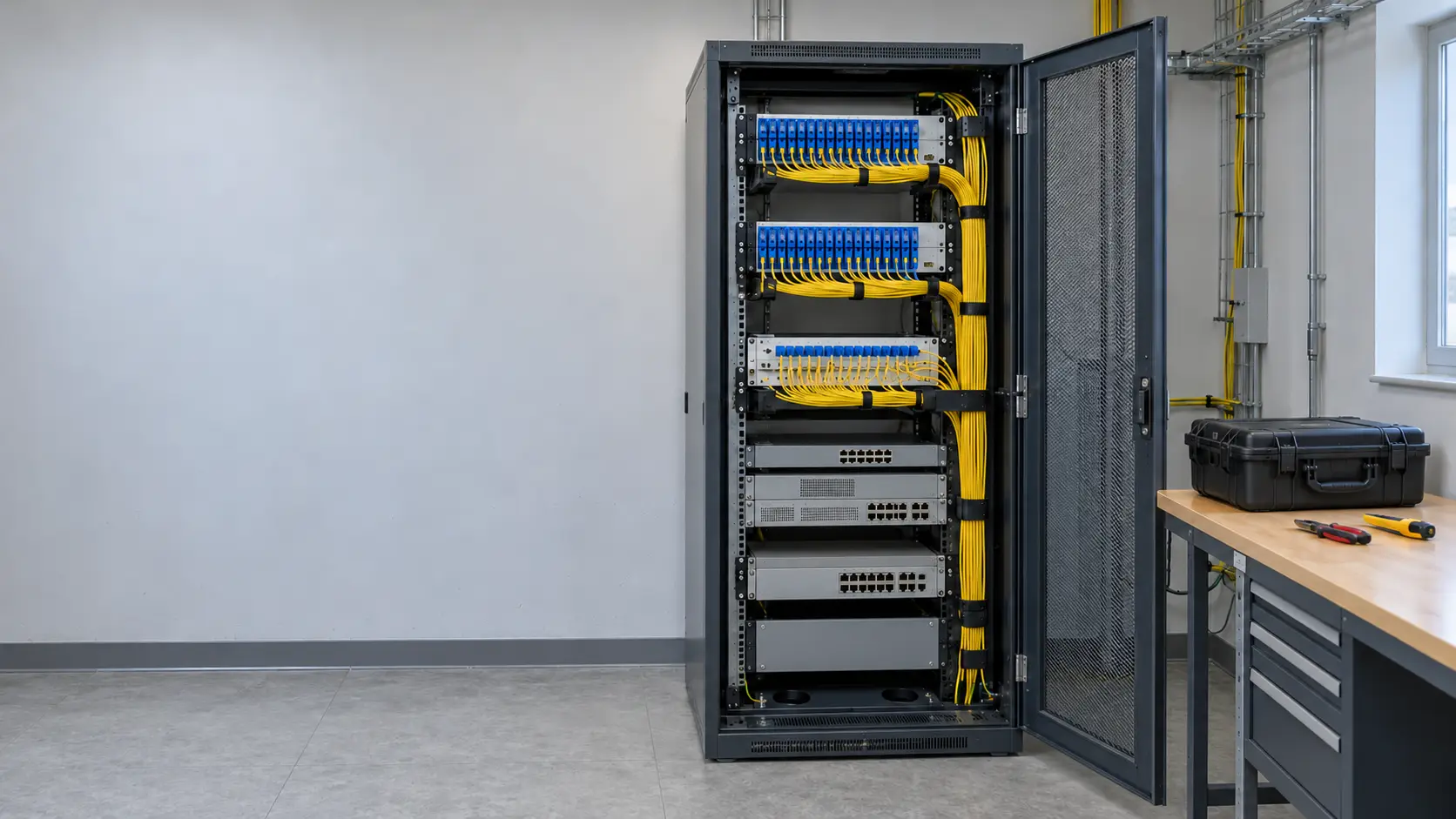
Let’s assess your needs and your site together, and work out the right architecture and project plan for you.